Price Reset
$
0
189.99
$
$
Price: $0 – $189.99
Sort by

4 products

Filter and sort
Filter and sort

4 products

Availability
Price
$
$
Material
Height range

4 products

WHY THE FORM FEELS SO GROUNDED

Roots and Bark Help the Bird Bath Feel Settled

A smooth pedestal sits on top of the ground. A tree-stump form looks like it grew out of it. The bark, the widened roots, and the uneven base pick up on the mulch, stone, and planting around it, so it looks established even when you only set it down last week.

THE IRREGULAR PART IS THE POINT

Knots and Uneven Lines Give the Form Its Character

The appeal is not in perfect symmetry. A branch cut, a hollow, a knot, or an uneven edge shifts the silhouette and catches the light a little differently. From a distance the form just looks natural. Up close, those small details give the eye something specific to land on.

Styling Tree Stump Bird Baths

Choose Planting That Lets the Trunk Stay Visible

A tree-stump bird bath already brings its own bark texture and irregular lines. Use planting and ground materials that help it settle in while keeping the basin, the trunk, and the root-shaped base easy to see.

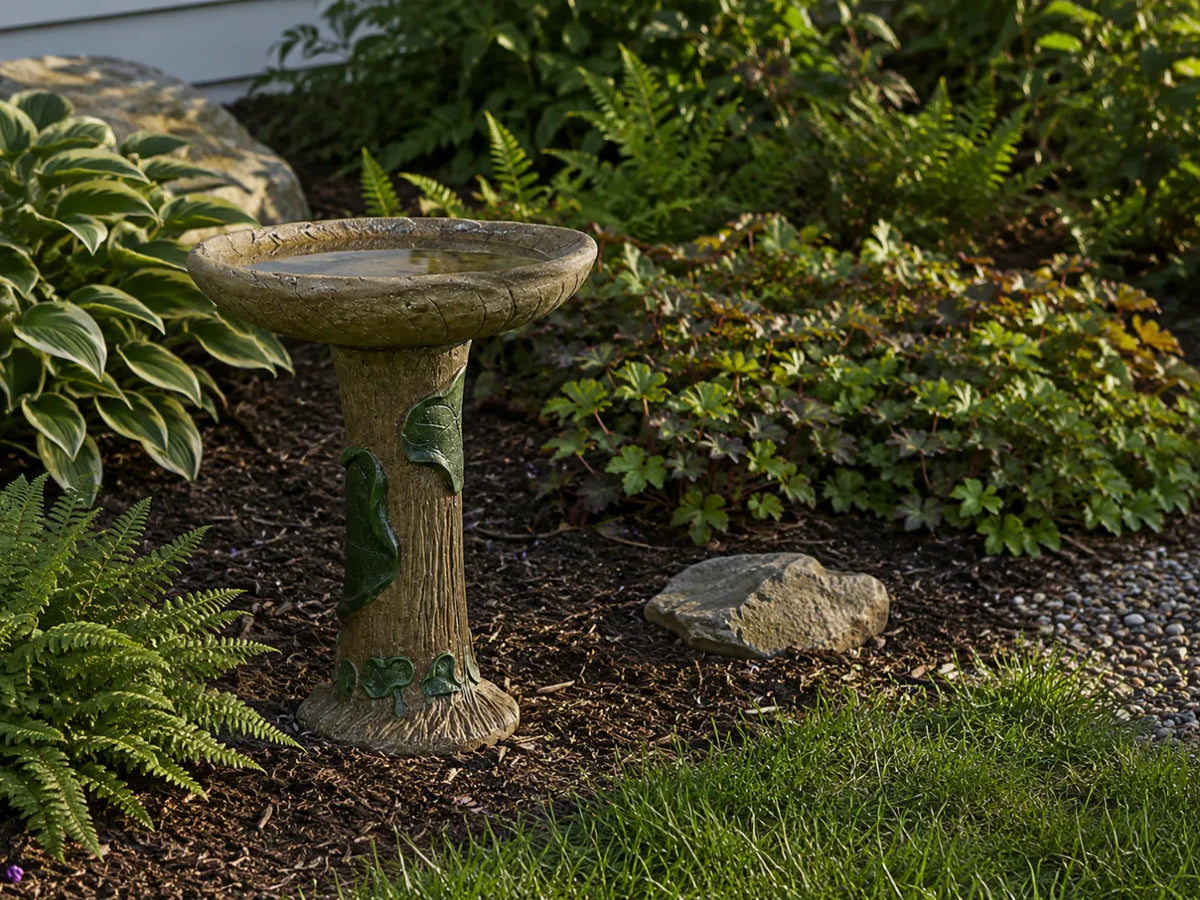
Tree trunk bird bath placed among ferns, hostas, mulch, natural stone, and woodland planting.

Woodland Settings

Layer Greenery Around the Form

Ferns, hostas, low shrubs, mulch, and natural stone help the trunk shape look at home in a shaded garden. Keep the taller foliage behind it and the lower planting around the base.

Works well beside: shaded beds, woodland planting, mulch, natural stone, and lawn edges.

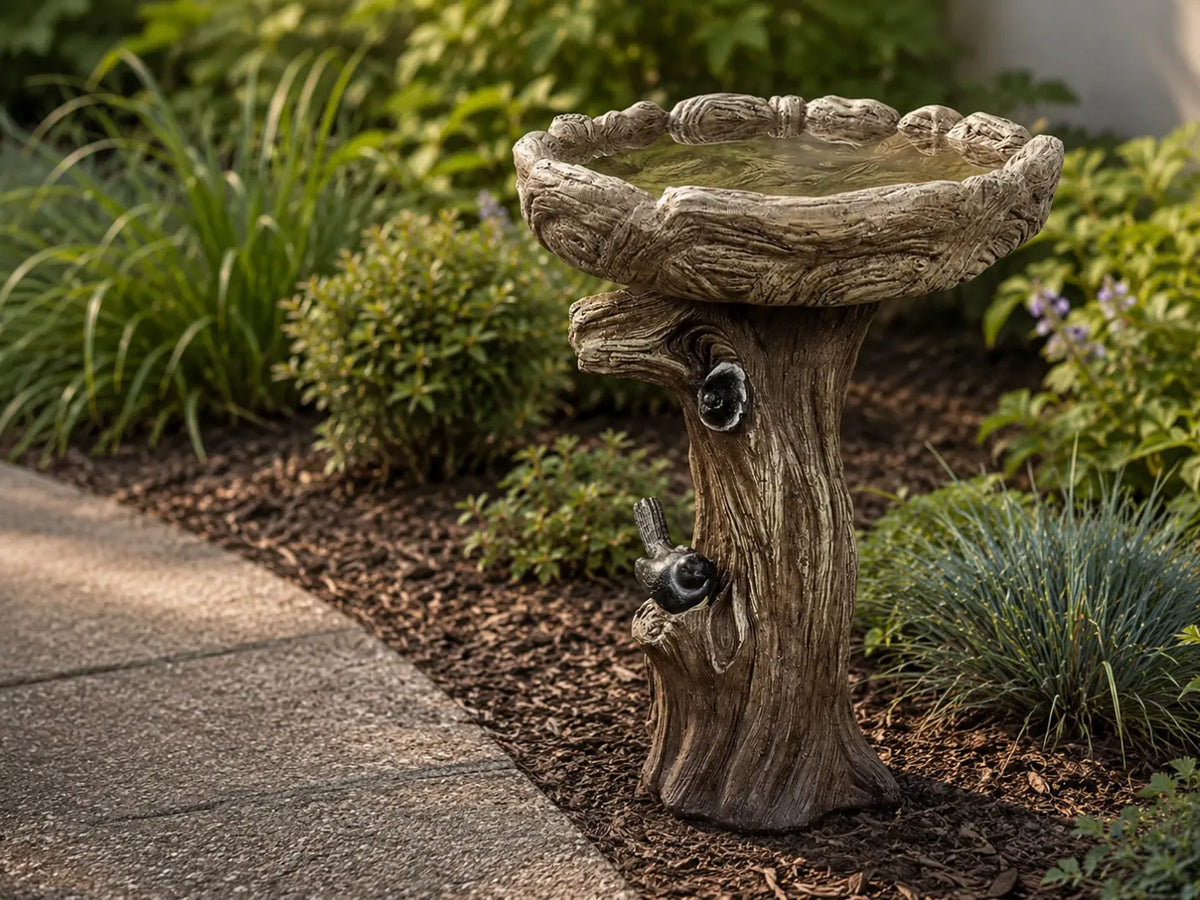
Tree knot and wood log bird bath placed beside lavender, daisies, herbs, gravel, and lawn.

Cottage and Relaxed Gardens

Use Flowers to Soften the Heavier Shape

Lavender, daisies, herbs, gravel, and an ordinary lawn edge soften the weight of the trunk. Use flowers in small groups and leave some ground showing around the roots.

Works well beside: cottage flowers, herb beds, gravel paths, patios, and informal lawns.

What tree stump means here

Stump, Trunk, Log

Three words people use for the same shelf, and they describe three different silhouettes.

A stump is what is left in the ground: short, wide, cut flat across the top. A trunk is the standing part, a column with bark on it. A log lies down. Search traffic runs heaviest on tree trunk bird bath, but the shapes people picture are not the same thing.

All of it is cast concrete finished to look like timber, around twenty three to twenty four inches, twenty seven to twenty nine pounds. Nothing here is wood, and the sections below explain why that is the point rather than a compromise.

The wider woodland shelf
Form Cast faux wood Concrete taken from a carved timber master
Height 23 to 24 in Short by design, and that is the shape working
Weight 27 to 29 lb Heavier than the timber it imitates
Water depth About 2 in Cut flat and level across the top
Finish Brown toned Color pulled back off the raised grain

Three silhouettes, and which one you are picturing

Read from thirty feet, a wood form is an outline before it is a texture. Get the outline right and the detail takes care of itself.

01

The stump is short and wide

Broad at the base, tapering slightly, cut off level. It looks like something that was always there and had a tree above it. The steadiest looking of the three, and the one that suits a lawn edge or a bed corner.

02

The trunk is a column

Straighter sides, less taper, bark running the full height. Reads taller than a stump of identical height because the eye follows the vertical grain up. Better against a wall, a fence or a hedge that gives it a background.

03

The log has knots and hollows

Cut ends, a knot hollow, a broken edge. Busier at close range and quieter at distance, so it is the one to choose if it will stand somewhere people walk past rather than look at from a window.

04

The one with something growing on it

Vines climbing the column, or a flower set into the timber. These carry more color and read as a piece of garden rather than a piece of forest. Good where the planting around them is already flowering.

Faux bois, and why concrete imitates wood at all

Casting concrete to look like timber is an old trade with its own name, faux bois, false wood. It came out of nineteenth century French and Mexican garden work, where the whole point was furniture and railings that looked like branches and lasted like masonry. Park benches made that way are still standing.

The method has not changed much. A craftsman carves the grain into a master, a mold is pulled from it, and the cast picks up every split and knot. Then the color goes on and gets wiped back so it stays in the low parts. That wipe is what makes grain read as grain instead of as brown paint.

How casting picks up texture

A real wooden bird bath against a cast one

Worth being direct, since anyone searching for a tree trunk bird bath has probably considered an actual piece of timber.

01

Wood rots at the waterline

Standing water against end grain is the worst case for timber. A hollowed log holding two inches of water year round softens at the rim first, usually inside three seasons.

02

Wood splits as it dries

A section of trunk checks outward from the center as moisture leaves it. Those cracks reach the basin eventually and the water goes out through them. Concrete has no grain to split along.

03

Damp timber attracts what you expect

Carpenter ants and beetles find permanently wet wood quickly. It is a fine thing in a log pile at the back of a garden and a poor thing in the piece birds drink from.

04

Weather improves the cast one

Rain deepens the grooves, sun lightens the ridges, moss finds the bark. Timber gets worse with every one of those. Concrete looks more like wood the longer it stands out.

Why a stump piece is never tall

Everything here lands within an inch of twenty four, and that is proportion rather than coincidence. A stump reads as a stump because it is wider than it is tall by a comfortable margin. Stretch the same form to thirty six inches and it stops looking cut and starts looking like a post with bark stuck to it.

That constraint happens to land in the right place. Twenty four inches is roughly where songbirds prefer a bath: high enough for a clear view of anything approaching on the ground, low enough that they can drop to it from a shrub rather than fly up to it. The shape and the bird agree.

What height birds actually use

Common Questions

Tree Stump Bird Baths FAQ

What is a tree stump bird bath?

It is a bird bath that uses the shape and texture of a tree trunk, stump, log, or exposed roots as its main structure. The trunk form might support the basin, act as the pedestal, or make up the whole piece.

Are tree stump bird baths made from real wood?

No. They reproduce the look of bark, roots, and knots in a molded outdoor material, not real wood. The exact material varies by product, so check the individual product page.

Should I choose a tall tree trunk or a lower log design?

A taller trunk stands out and can anchor a corner or a bed on its own. A lower log or stump sits closer to the ground and suits a spot you see up close. Match the height to the space and how much presence you want.

Where should a tree stump bird bath be placed?

It looks most natural where planting meets open ground, at the edge of a shaded bed, a woodland corner, or along a lawn. Give it a little space so the trunk and roots stay in view.

Will a tree stump bird bath look natural in an ordinary backyard?

Yes. Even in a plain backyard, the trunk form reads as natural rather than decorative, especially with a little mulch, stone, or low planting around the base to tie it in.

Are detailed bark surfaces difficult to clean?

Not really. Empty and rinse the basin as usual, and use a soft brush to clear debris out of the deeper bark grooves. Skip abrasive pads and harsh cleaners, and follow the care instructions for the piece.

Can a tree stump bird bath stay outside during winter?

It depends on the material and how the piece is made. Before freezing weather, drain the basin fully, clean and dry it, and follow the storage or protection instructions on the product page. Do not let water sit and freeze in the basin.