


A bird bath's location affects access, water temperature and how easy it is to maintain. Basin shape, footing and regular cleaning matter too; placement alone cannot guarantee clean water or more visitors.
Start with a stable site where birds can see approaching danger and you can reach the basin to empty and clean it. Then consider sun, falling debris and the view from your home.
Check Sightlines and Escape Perches
Bathing birds can be vulnerable to predators. Keep the basin away from dense, low cover that could conceal a cat, while allowing access to nearby perches for escape and preening.
There is no universal 10–15-foot safety distance for every garden. Check the actual layout, visibility and escape routes. Open ground between the bath and hiding cover can help birds see an approaching cat; keep pet cats indoors and monitor visitors.
A pedestal can make viewing and maintenance convenient, but it does not neutralize a cat or make a bath predator-proof. Compare the pedestal model by its actual basin access and stable support, and address recurring cat visits before treating height as a solution.
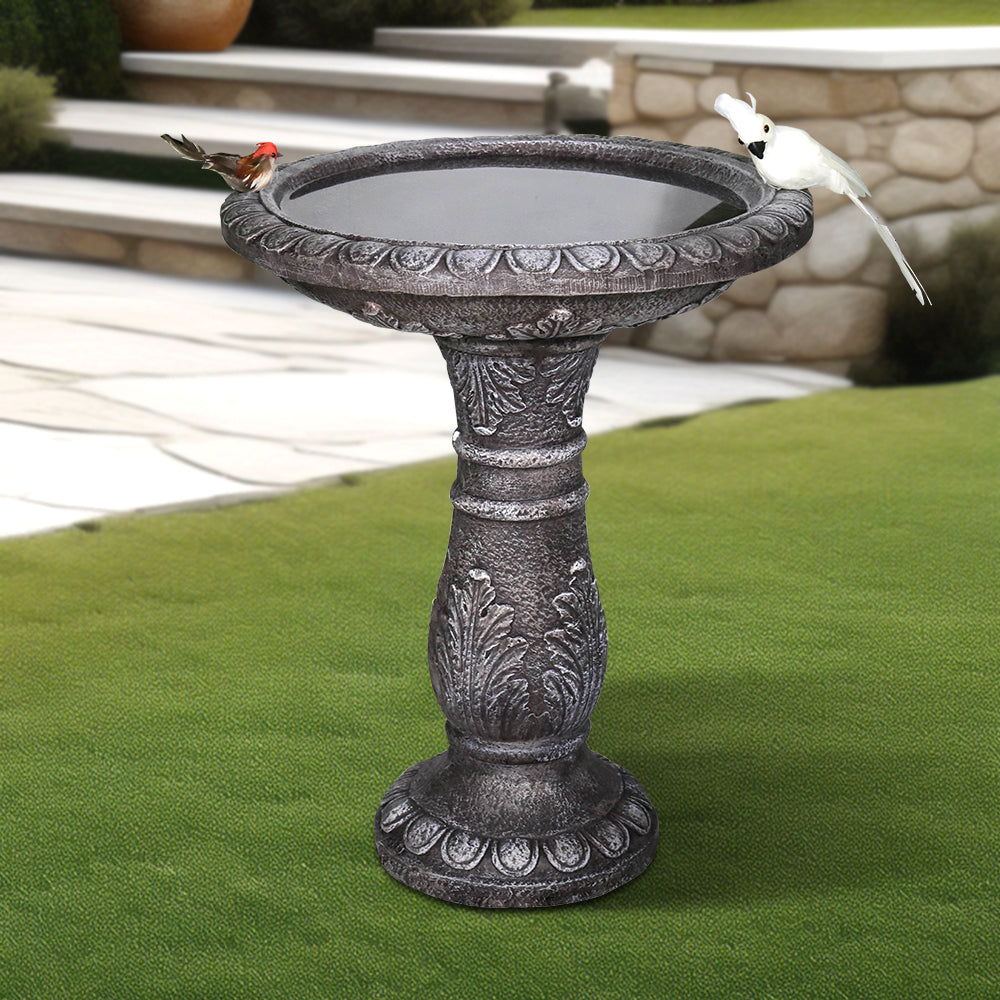
Species-Specific Preferences: Tailoring Height for Your Targets
Species and individuals may use different heights. Watch the local visitors rather than assuming foraging height dictates one required bathing height.
Robins, Mourning Doves and many sparrows forage on the ground and may use a low basin. Assess nearby hiding cover and keep the water easy to clean; placing it at a flowerbed edge is not automatically safe.
Blue Jays and Cardinals also use garden water. A raised basin is one option, but it is not the only way to attract them. Usable depth, steady footing and the surroundings matter at any height.
Sun vs. Shade: The Battle for Clean Water
Sun exposure is one part of water care. Shade, debris, weather and how often the water is refreshed all affect the conditions in a basin.
Strong summer sun can warm shallow water and speed evaporation. Check the actual temperature and water level; no fixed number of days applies to every bath.
Dappled shade or afternoon shade can be useful in hot weather. It does not prevent algae or replace cleaning: remove contamination promptly and refresh the water regularly even when the bath stays shaded.
Material Science: How Sunlight Dictates Your Choice
For a full-sun site, compare the individual model's outdoor and finish-care instructions and plan frequent water checks. Moving to a cooler, suitably supported spot may help when the water becomes too warm.
Plastic, resin and concrete products differ in formulation, finish and exposure limits. A material name or low price does not establish toxic leaching, a fixed time to fading or a guaranteed thermal crack.
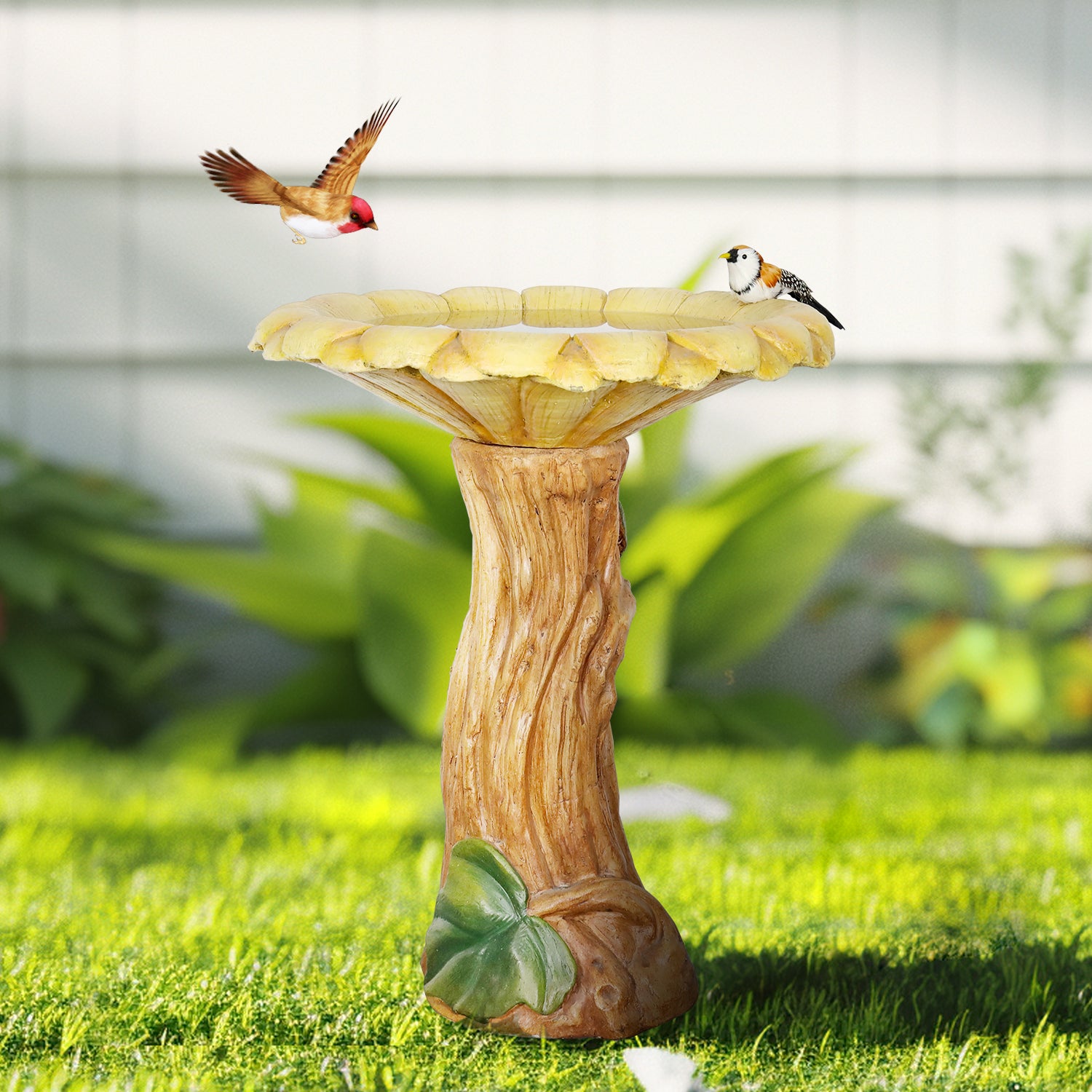
Our sunflower concrete bird bath is one design to compare. Its faux-wood appearance does not establish fiberglass reinforcement, immunity to UV effects or cool water at midday. Follow the specific finish instructions and check water conditions where it is installed.
Seasonal Shifts: Dynamic Placement Strategies
Reassess the setup as weather and shade change. Moving the bath is optional; do so only when the model can be moved safely and the new site provides suitable support.
During hot weather, useful shade can help with water temperature and evaporation. Keep checking and maintaining the water rather than expecting shade to prevent all algae.
Winter sun may slow freezing in some conditions, but it cannot keep every basin ice-free or prevent freeze damage. Follow the bath's winter instructions, and do not leave vulnerable concrete full of water merely because it sits in a sunny position.
Read our winter bird bath care guide for planning before freezing weather. Material density alone does not prevent winter cracking.
The Big Mistake: Mixing Food and Water Zones
A very common beginner mistake is placing the bird bath directly underneath or right next to a hanging bird feeder, assuming it creates a convenient "dining and drinking" combo.
Seed hulls, food and droppings can dirty the water. Place the bath outside the feeder's falling-debris area, check after feeding activity and clean as needed. Choose separation for the actual layout; 10–15 feet does not guarantee pristine water.
Where to Place a Bird Bath in the Front Yard?
In a front yard, combine a view you enjoy with bird access, stable support and easy maintenance. If it is near a window, assess collision risks and use effective exterior window treatments where needed.
Integrate it into an existing flowerbed rather than dropping it arbitrarily on the grass, using low-growing ground cover plants around the base to anchor it visually into the landscape.
Compare outdoor bird baths by usable depth, footing, support and care requirements, then choose a site you can maintain. A good layout can reduce problems without promising a risk-free wildlife area.
Frequently Asked Questions
Should a bird bath be in the sun or shade?
In hot weather, dappled or afternoon shade can help limit warming and evaporation. Check actual conditions and falling debris. Shade does not prevent all algae, and cleaning remains necessary in every position.
How far should a bird bath be from a feeder?
Keep it outside the area where seed hulls, food and droppings fall. The needed distance depends on the feeder and layout; inspect and clean the water rather than relying on one minimum spacing.
How high off the ground should a bird bath be?
Choose a height that birds can access and that you can maintain on a stable base. Ground-level and pedestal baths can both be used. Neither a 24-inch pedestal nor a 2–3-foot height makes the water safe from cats.